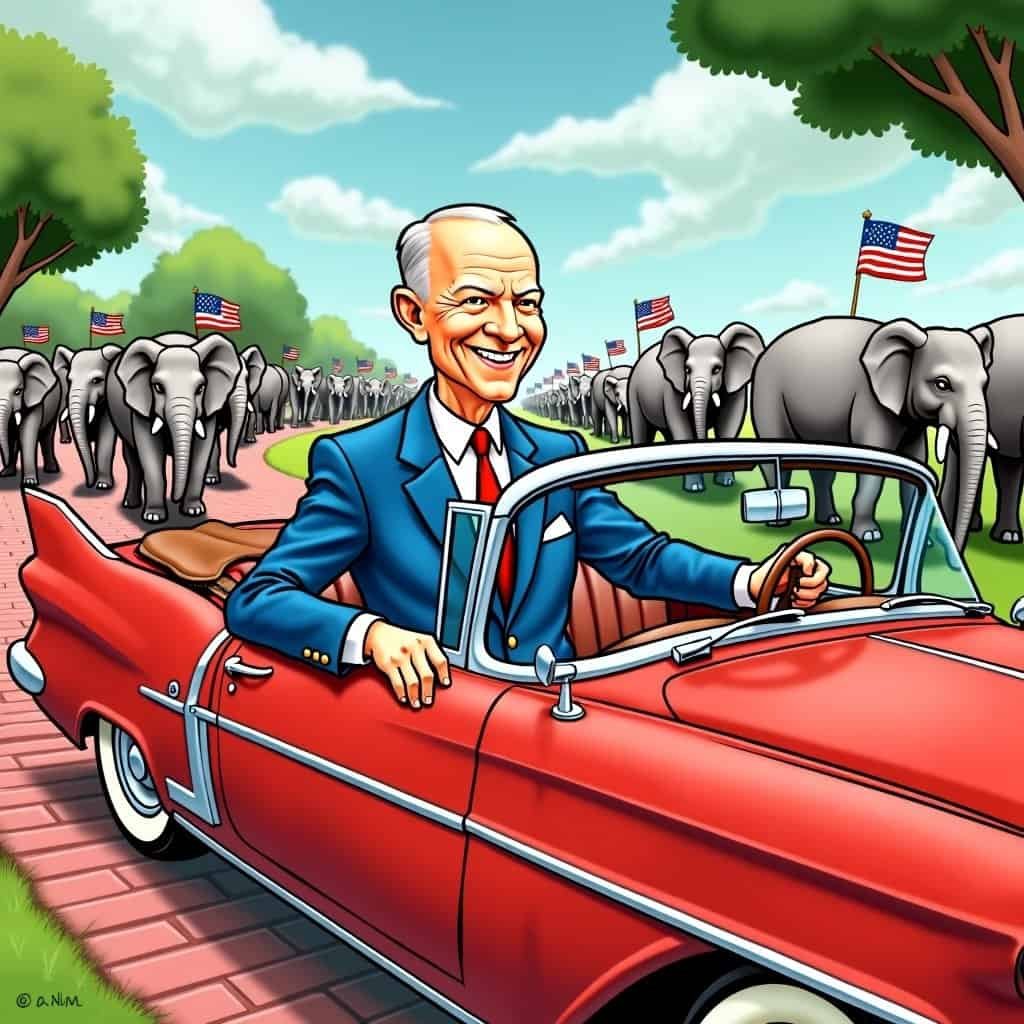
Who would’ve thought the Geneva Accords and conservative values could be two peas in a pod? Well, buckle up, because President Dwight D. Eisenhower’s clever nod towards these accords is a masterclass in conservative strategy. Imagine a world in post-war disarray, and there we are, championing ‘personal responsibility’ and a robust ‘national defense’ – exactly what Eisenhower embodied during his time in office.
Let’s take a trip back to the 1950s—Eisenhower was at the helm, walking a tightrope between war hawks and peace doves. He skillfully supported the Accords without dragging us into another conflict, showing us how conservatives handle foreign policy. The man had a knack for serving up diplomacy like it was a Sunday special—smooth, but with a kick.
Eisenhower’s Approach to Foreign Policy
Ike knew how to blend military smarts with cautious strategy. Instead of charging in like a bull in a china shop, he’d tread carefully and support international agreements, flexing America’s muscles without giving up our independence. This mirrors the core conservative belief in maintaining a strong military to ruffle feathers when necessary, but with a dash of diplomatic finesse.
| Conservative Value | Eisenhower’s Application |
|---|---|
| Strong National Defense | Maintained military readiness while avoiding unnecessary conflicts |
| Fiscal Responsibility | Balanced diplomatic efforts with economic considerations |
| Limited Government | Avoided overreach in international affairs |
It’s important to remember that Eisenhower’s support for the Geneva Accords wasn’t about giving in; it was about protecting national interests while dealing with the messy world of international relations. His approach showed how effective it is to keep a strong national defense without getting tangled up in unnecessary commitments—a perfect example of conservative diplomacy at its best.
Fiscal Implications of Eisenhower’s Strategy
Now, let’s chat about how this ties into fiscal conservatism. By being careful with our resources while respecting international agreements, we let the free market of diplomacy do its thing, balancing power without wasting national treasure. This keeps our dollar strong and our economic independence intact—just how our good friend Mr. Green-backs (our dollars) likes to spend his vacation!
Eisenhower’s support for the Geneva Accords puts a new spin on starting local and thinking federal—and what better way than mixing personal responsibility, national strength, and smart diplomacy? With conservative smarts woven into international relations, Eisenhower showed how to make strong decisions without throwing money at problems.
Lasting Impact on Conservative Values
Dwight’s clever moves weren’t just about agreements; they were about shaping a government, a world, and a country in line with conservative principles to navigate rough seas with our flag flying high, without handing the wheel to big government.
So, next time someone looks confused when you mention the Geneva Accords and Dwight D. Eisenhower in the same sentence, remind them of the strategic brilliance that embodied conservative values. As Republicans, we raise our glasses to Ike, remembering the clever balance and conservatism he wrote into the history books!
Table of Contents
- Eisenhower’s Approach to Foreign Policy
- Fiscal Implications of Eisenhower’s Strategy
- Lasting Impact on Conservative Values