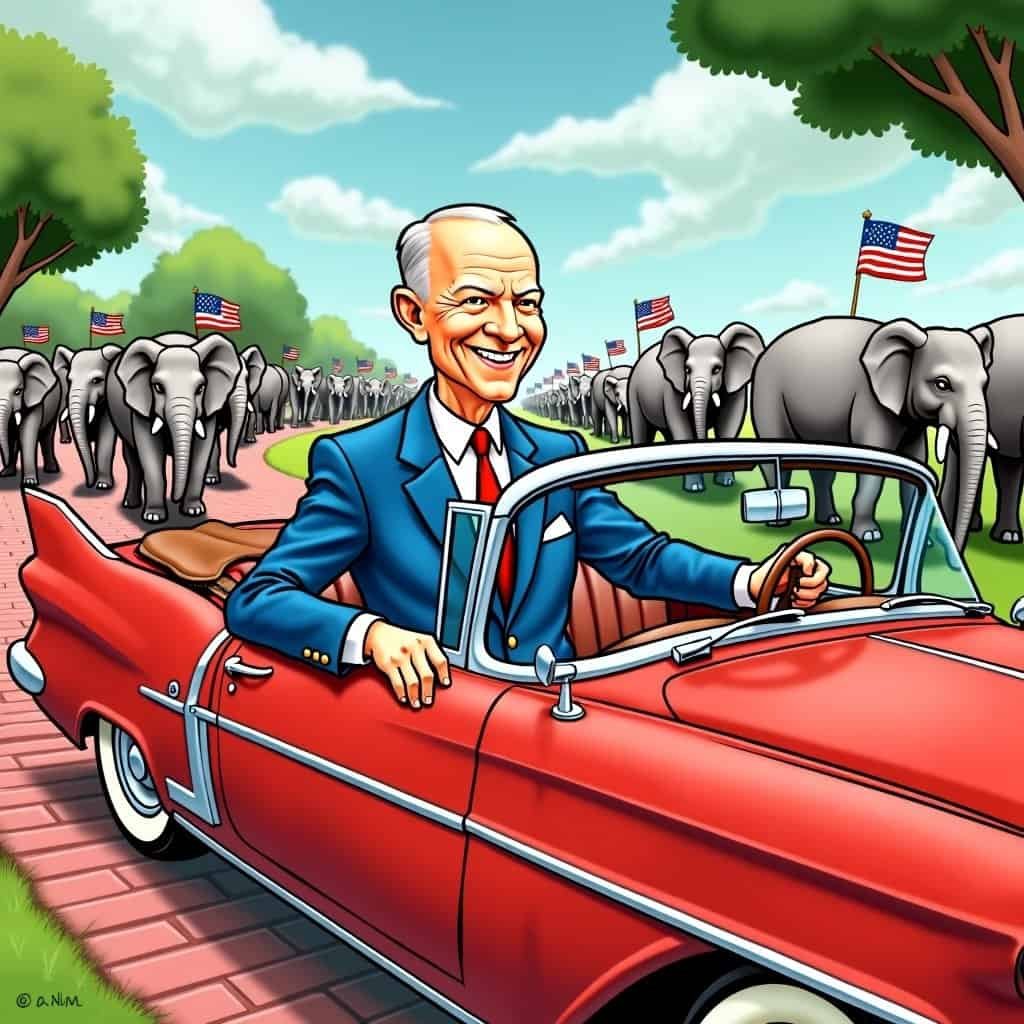
Once upon a time, in post-war Europe, when the only thing recovering quicker than the nations were their politicians’ hairlines, a certain U.S. General turned President, Dwight D. Eisenhower, stepped in with a kind of support only a true conservative could dream up—tough, practical, and incredibly resourceful!
Europe had just been through the wringer, looking like the morning after a particularly wild toga party at a frat house. The continent desperately needed not just a helping hand, but one armed with the tools of innovation, ingenuity, and, of course, the almighty dollar bill. And who better to introduce them to some rock-solid conservative values than our man Ike?
Now, Ike wasn’t about to let Europe sink into a socialist quicksand of despair (and sky-high taxes). No way, he had a plan—a plan as American as apple pie and late-night infomercials. Enter the European Recovery Program, aka the Marshall Plan. Picture this: a massive injection of $13 billion (adjust that for inflation and you’ve got some serious cash) designed not to coddle but to jumpstart European economies back onto their feet via capital investments. Eisenhower knew that the road to prosperity didn’t come from endless government handouts, but from promoting self-reliance and free enterprise within thriving economies.
Eisenhower’s Approach: Tough Love for Europe
Imagine Ike strolling into a European Plan meeting, cigarette in hand, his WWII battle-hardened gaze scanning the room. Here’s how it might have played out in our hypothetical satire: “Europeans! We Americans are here for you just like your favorite uncle with the checkbook, but with a twist! We’re gonna teach you how to fish instead of just giving you the fish.” Now that’s tough love.
Marshall Plan Quick Facts
- ✅ Total Aid: $13 billion (approx. $143 billion in 2022 dollars)
- ✅ Duration: 1948-1951
- ✅ Countries Aided: 16 European nations
- ✅ Key Focus: Economic recovery and integration
- ✅ Eisenhower’s Role: Supporter and implementer as President
By making sure the funds went to boost economic support—setting up necessary infrastructure, kick-starting industrial ventures, and breathing new life into agriculture—Eisenhower knew the rising tide of trade and market economy would lift all boats. No redistribution handouts or heavy taxation here. Just plain ol’ opportunities paired with a classic conservative belief in individual abilities and entrepreneurial spirit.
The program encouraged economic teamwork and integration among European countries. Yes folks, even conservatives can play nice with international policies if it beefs up the global economic playing field and opens up trade, profit, and prosperity.
The Economic Fairy Tale: Ike’s Conservative Magic
What’s the moral of this economic fairy tale, you ask? Well, Ike’s approach made sure Europe wasn’t perpetually spoon-fed by creating an environment ripe for business and washed down with a glass of good ol’ American foreign-policy cheer. It’s about driving growth and innovation not through government’s far-reaching fingers, but through the energy of free-standing, self-regulating markets.
In today’s political circus, it’s worth remembering mighty Eisenhower’s success in stabilizing ravaged economies. His conservative strategy was all about crafting a cycle where support today means independence and growth tomorrow. Just imagine if such ideas were applied with the same patriotic fire to modern-day money troubles. We’d likely see less taxpayer burden, more fiscal freedom, and surely, an economic story even Uncle Sam would give a standing ovation!
Conclusion: Cheers to Conservative Wisdom
So, raise a glass to Eisenhower, the man who showed Europe that conservative support wasn’t just about ‘how much,’ but ‘how smart.’ America truly has had its share of clever cookies, and thankfully, Ike was as wise as they come. Here’s to the conservative spirit and its lasting impact on freedom, independence, and yes, fiscal prosperity!
Table of Contents
- Eisenhower’s Approach: Tough Love for Europe
- The Economic Fairy Tale: Ike’s Conservative Magic
- Conclusion: Cheers to Conservative Wisdom